Xcel Energy
Case Study 1: Business Welcome Experience
Problem
The project aimed to create an omnichannel welcome strategy for business customers, focusing on Small & Medium Businesses (SMB) and Large Businesses in Colorado and Minnesota.
Biggest Challenges
👯 Engaging two distinct audience segments with tailored content.
📚 Achieving brand cohesion and storytelling across states.
📣 Driving both engagement and conversions with limited traffic typical for B2B utility campaigns.
➰Ensuring content relevance and clarity to reduce bounce rates and increase engagement.
Process Overview
Developed landing pages and a six-email journey segmented by business size and geography.
Used A/B testing for initial emails to optimize open rates, click-through rates, and conversions.
Iterative content adjustments based on analytics and audience response.
Ongoing updates to storytelling elements and case studies, with quarterly or seasonal reviews.
User Flow & Content Mapping
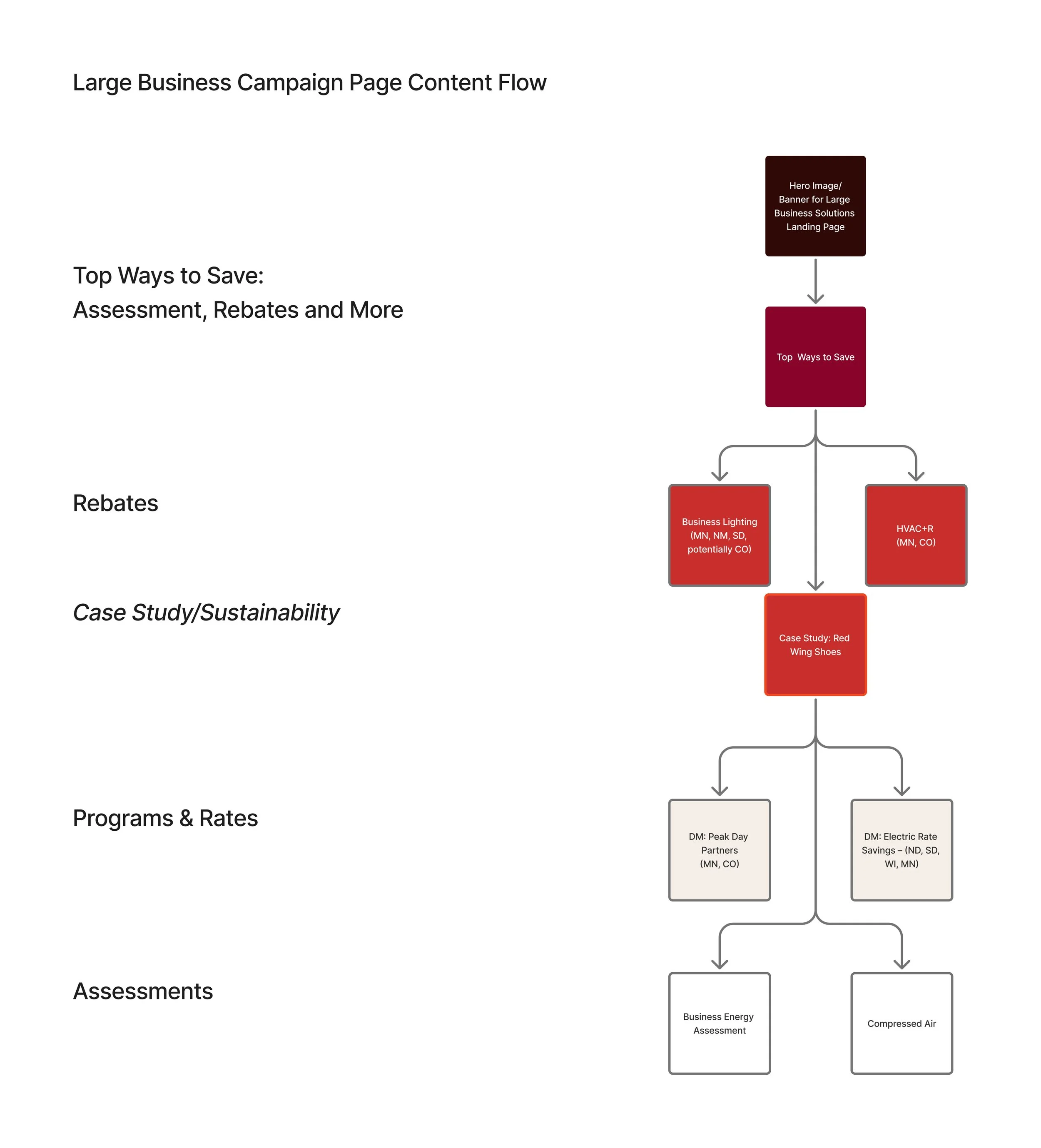
Created detailed content maps for both SMB and Large Business segments, iterating through several versions based on stakeholder feedback to optimize the flow:
SMB flow prioritized “Ways to Save,” assessments, rebates, and case studies.
Large Business flow emphasized detailed program info, assessments, and sustainability.
Final versions of content maps ensured clear navigation and logical progression from welcome to conversion actions.
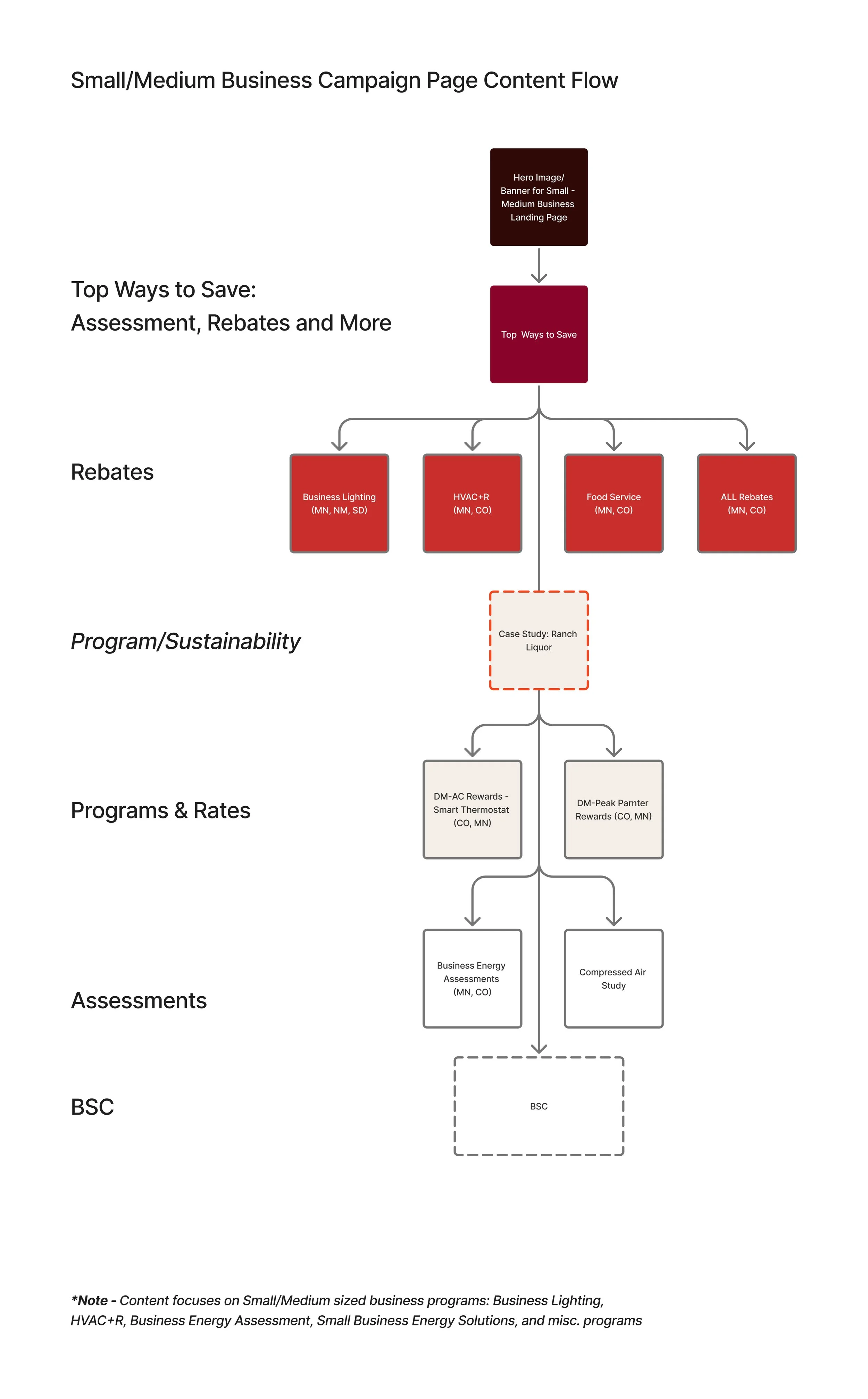
Content Mapping: Landing Pages & Email Journey
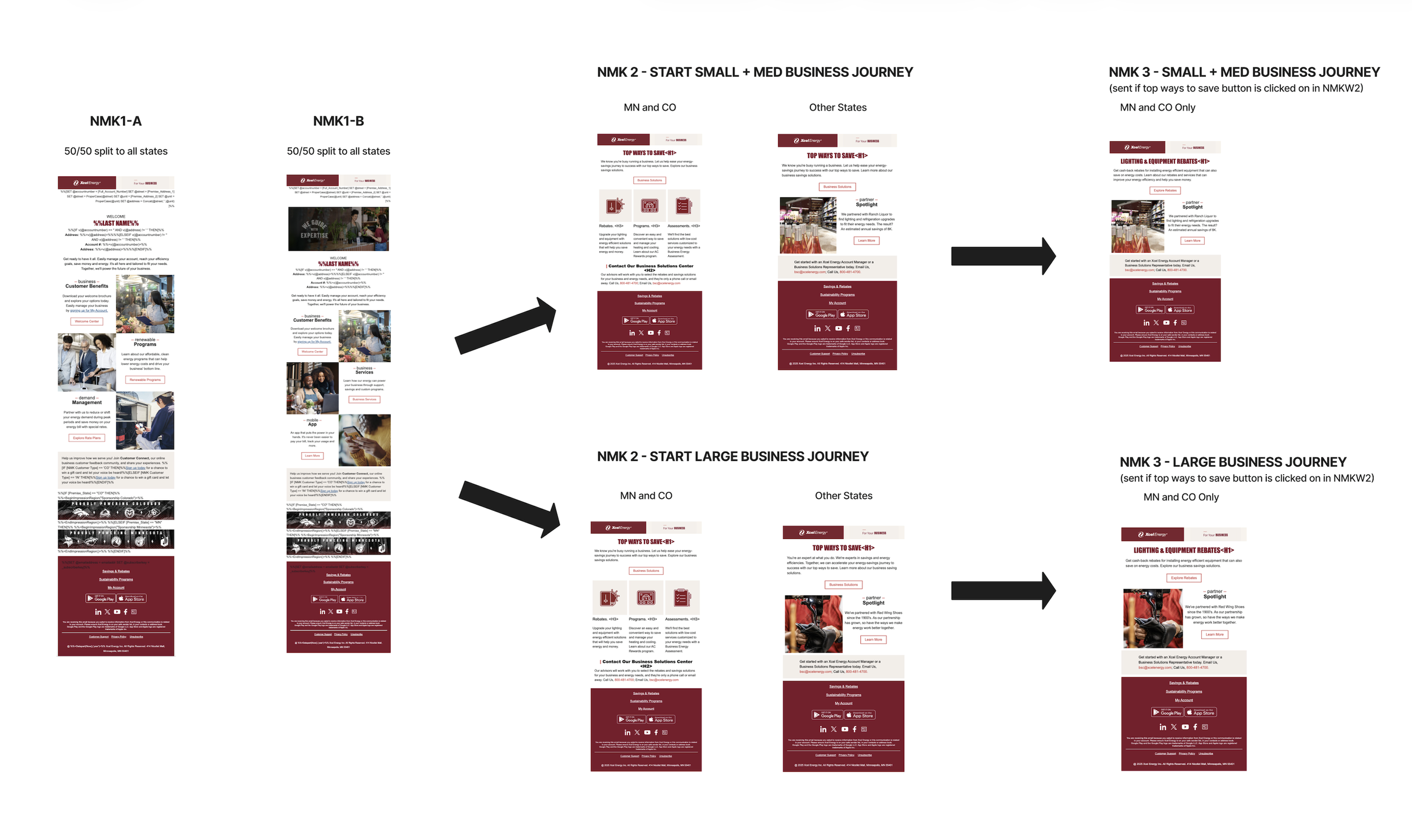
Experience Visuals
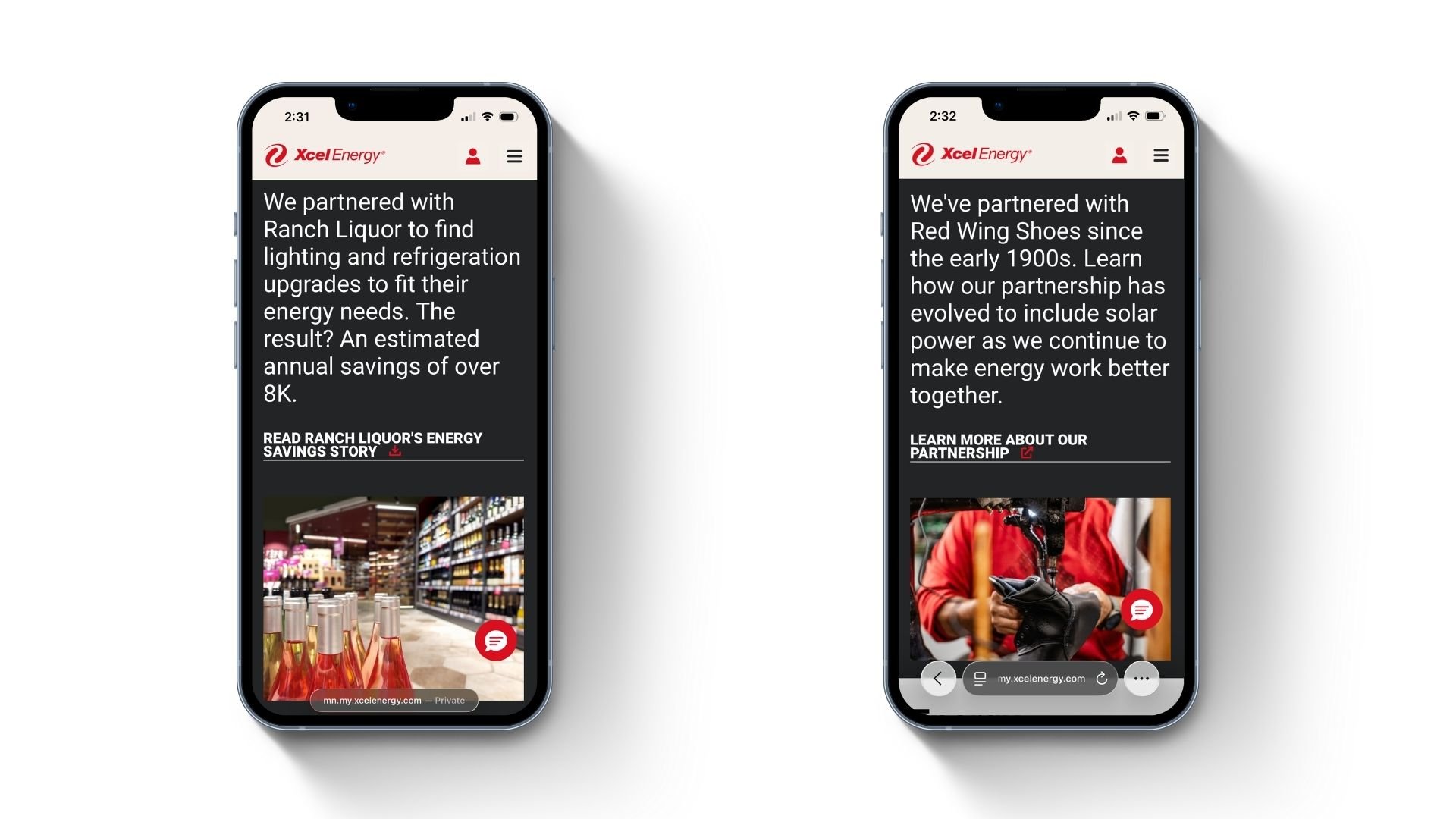
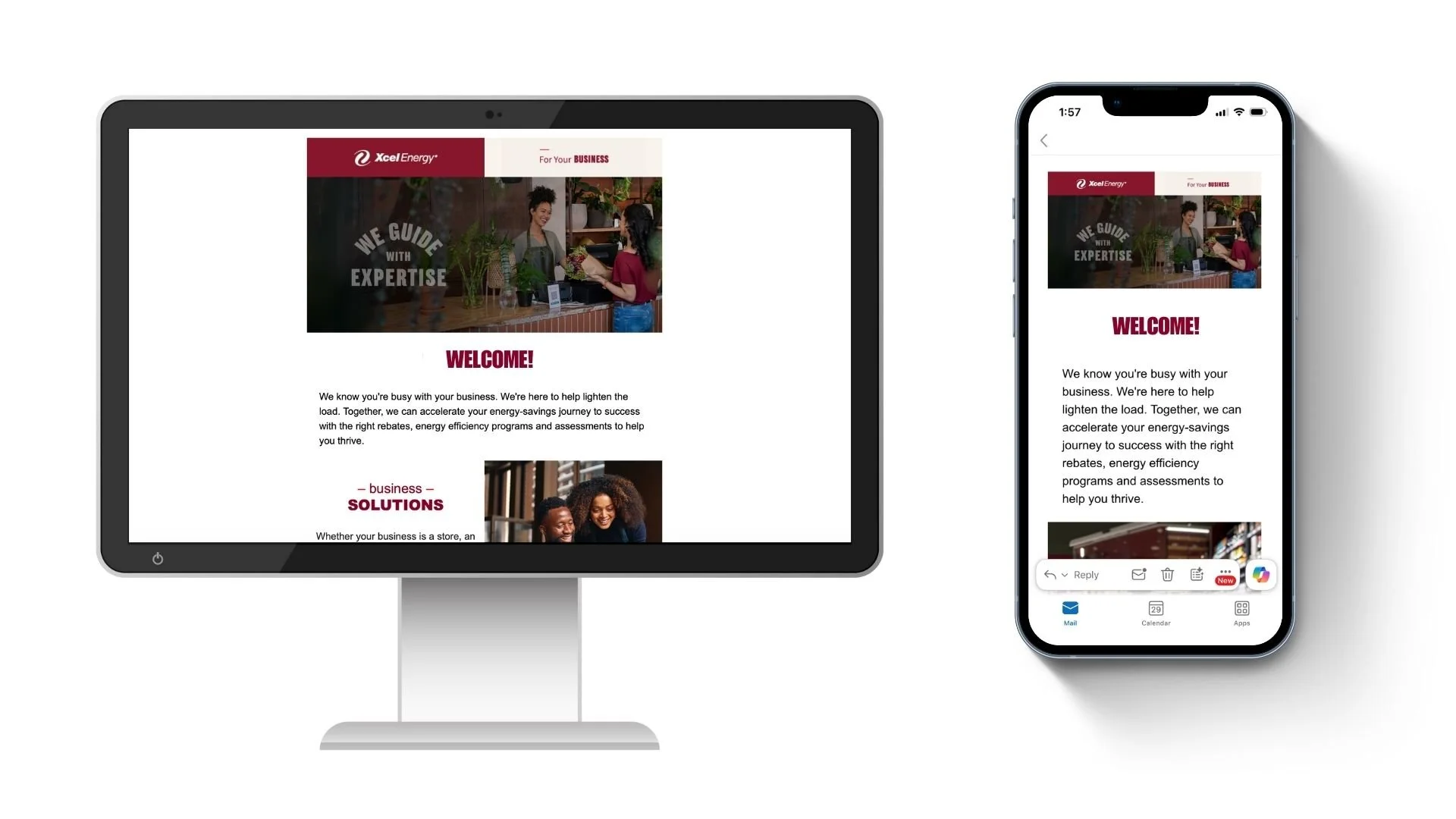
Landing pages and emails featured strong brand visuals, case studies (e.g., Ranch Liquor for SMB, Red Wing Shoes for Large Business), and clear calls to action.
Visual cohesion was maintained across all assets, with images and layouts designed for clarity and engagement.
Email and landing page designs were tested and refined based on user interaction data.
Key Insights & Takeaways
SMB audiences were more engaged than Large Business audiences, with higher engagement and lower bounce rates.
Email A/B testing revealed that while one version had higher open and click rates, the other drove more conversions—highlighting the importance of CTA placement and content focus.
Despite lower overall traffic, thoughtful design and segmentation drove significant engagement, achieving a 92% engagement rate for the landing page (63% industry average).
Continuous monitoring and iteration are essential for optimizing both web and email journeys.
Case Study 2: Common Framework
Problem
The project aimed to building a scalable application framework for Building & Remodeling programs across 7 states.
Biggest Challenges
🔌 Customers and contractors use a separate experience instead of Xcel’s mobile application (My Account), creating a fragmented journey.
📝 Building & Remodeling applications submitted by contractors contain complex business rules, forms, and workflows that require significant development effort.
📈 Future programs need a reusable, data-driven framework that scales without custom development for every application.
Process Overview
This project created a common framework that uses reusable Omnistudio components and configuration-based logic instead of custom development.
Building & Remodeling serves as the pilot program, with plans to expand the framework to future programs once the foundation isestablished.
My role focused on content strategy, UX writing, content governance, form design, and information architecture.
User Flow & Content Mapping
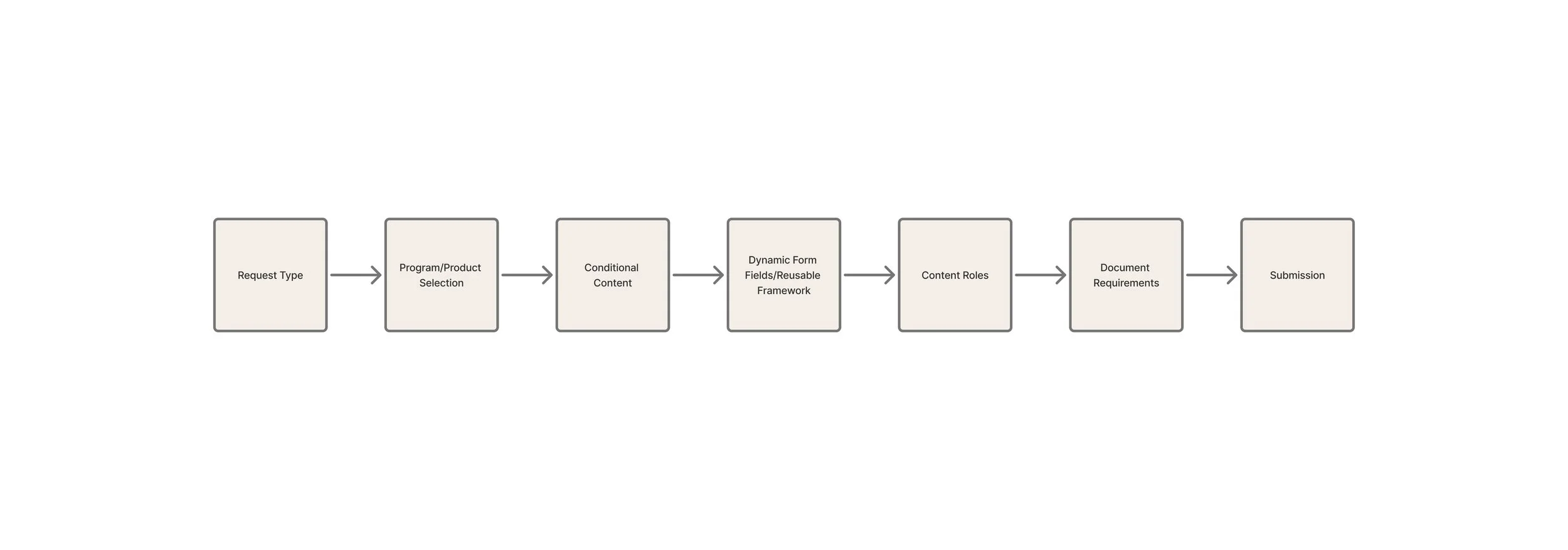
Customer enters through My Account or Partner Portal.
Selects a request type (New Service, Change Existing Service, Temporary Service, EV Charging, etc.).
Dynamic forms display based on program and product selections.
Customer provides contacts, supporting information, and documents.
Customer reviews and submits the application
Content Created
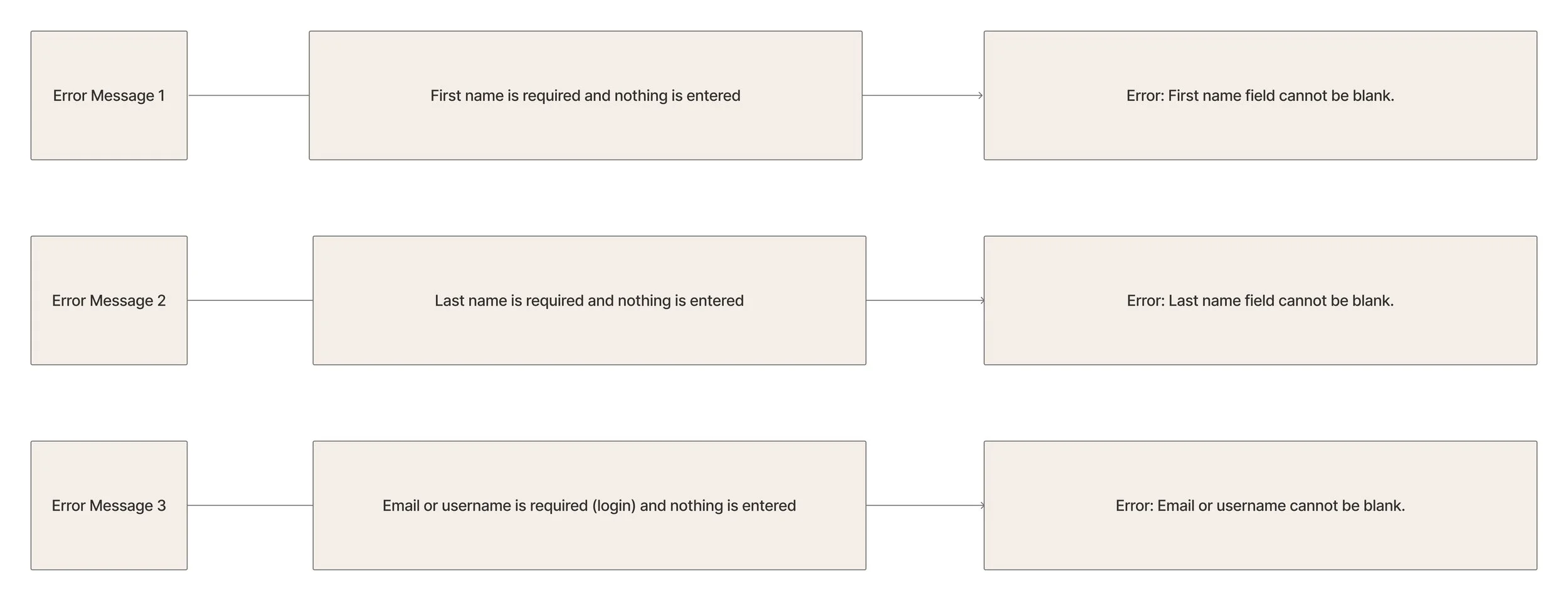
Page omniscript, Form Labels, Helper Text, Error Messaging, and Validation Standards
Experience Visuals & Key Areas Designed
Partner Portal Login & Registration
My Account Entry Points
Request Center
Program Details Pages
Application Workflows
Billing Account & Contact Split Experience
Key Insights & Takeaways
Structured content is essential for scalable, reusable application experiences.
Consistent labels, error messaging, and form patterns improve usability.
Content strategy plays a critical role in platform architecture and scalability.
Designing the framework, not just the pilot program, helped create a foundation that future programs can reuse.
Impact
The impact of the project reduced dependence on custom development, established reusable content and component standards, and built a scalable framework for future customer programs and applications saving over 1.5 Million development dollars annually.